Capturing the Moment

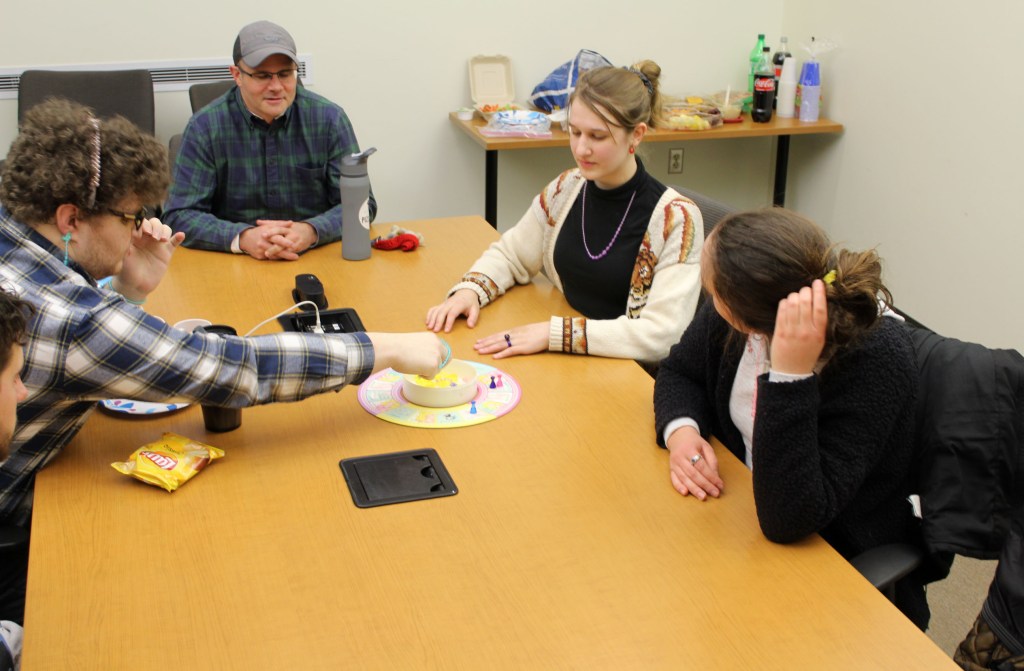
Left to right: Chandler Leeka, 20-year-old German major from Columbus, Ohio, Jason Miscka, 40-year-old graduate from The University of Toledo from Toledo, Ohio, Lydia Rich, 21-year-old German major from Burgoon, Ohio and host of the event, Julia Vogelsang, 21-year-old Recreational Therapy major from Cincinnati play the game “Pretty Pretty Princess” as part of German Club Game Night in room 2440 in Memorial Field House at The University of Toledo last Thursday. UToledoPJ Steven Bieber

It is always both exciting and challenging to look for something that is newsworthy. As a writer for the Collegian, I am used to the struggle of digging for news. Finding a story is probably the hardest part of the process for me. Once I find one it gets easier from there. For this assignment I had to take a picture when I am used to writing.

            For the first picture, I had to find something newsworthy and take a single photo with a DSLR camera. I took pictures of the German Club having their once a semester game night. Knowing I would have to label every person in the picture, I made sure I took my pictures quickly. I took pictures of four people during the first game that was played.

            One lesson I learned was not to be afraid. It can be annoying to ask four different people for their information just so I can properly tag them in the caption. Luckily all four people were happy to have their picture taken and to give me the information they needed.

            I learned how important it was to take a variety of pictures. I took close to 50 pictures and only five were good enough to post onto my website and social media. Had I been lazy and only taken one or two pictures, I would have put myself in a bad situation.

            I discovered that most people are surprisingly comfortable with someone walking in a circle around them and repeatedly taking pictures. After I told everybody what I was doing, they all just ignored me and played their board game.

            For the group of pictures that I took my phone, I realized that even though I had taken pictures on my phone in the past, I did not know how to take a proper picture on a phone. Trying to tell a story in only a handful of pictures can be difficult.

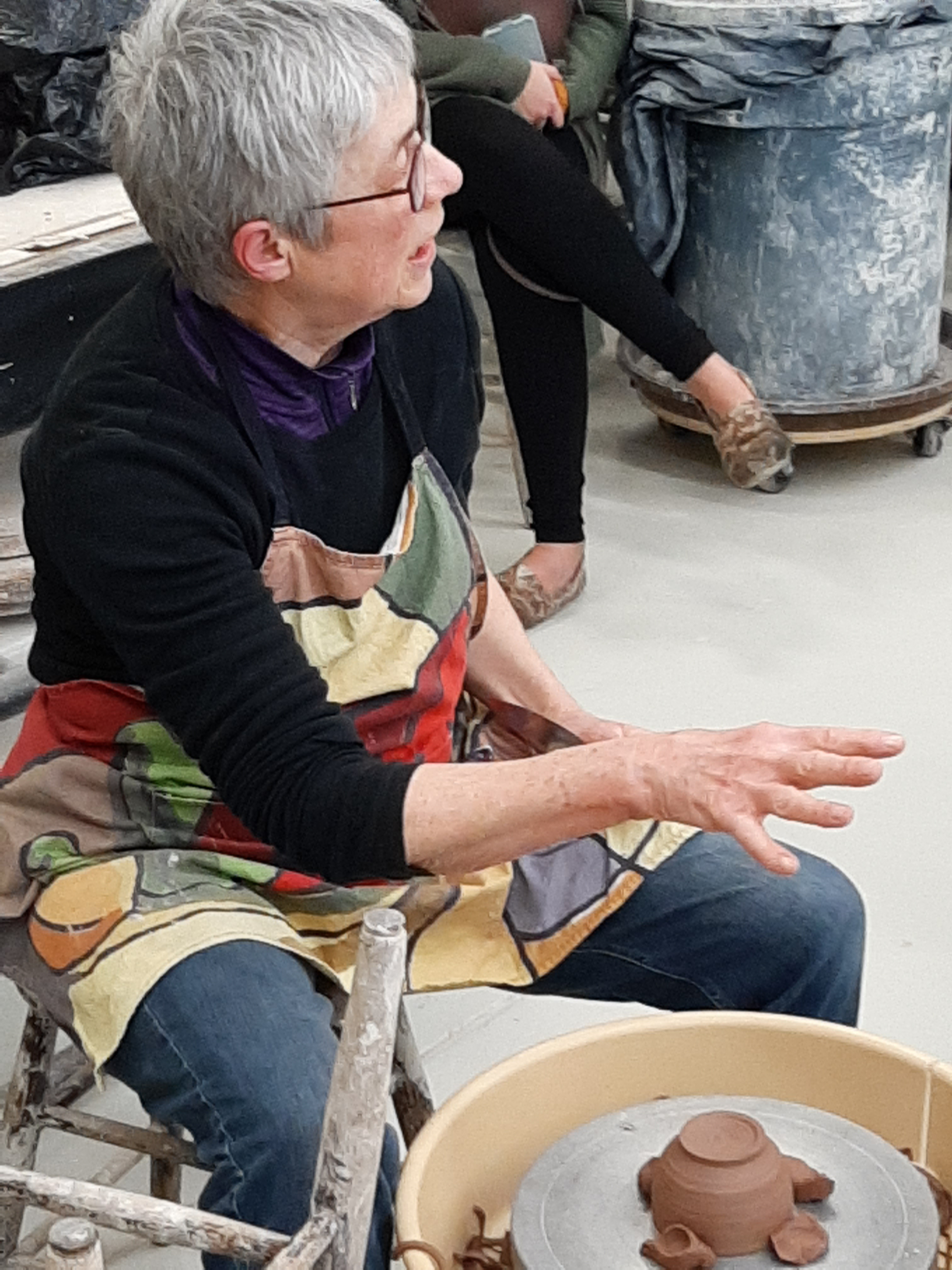
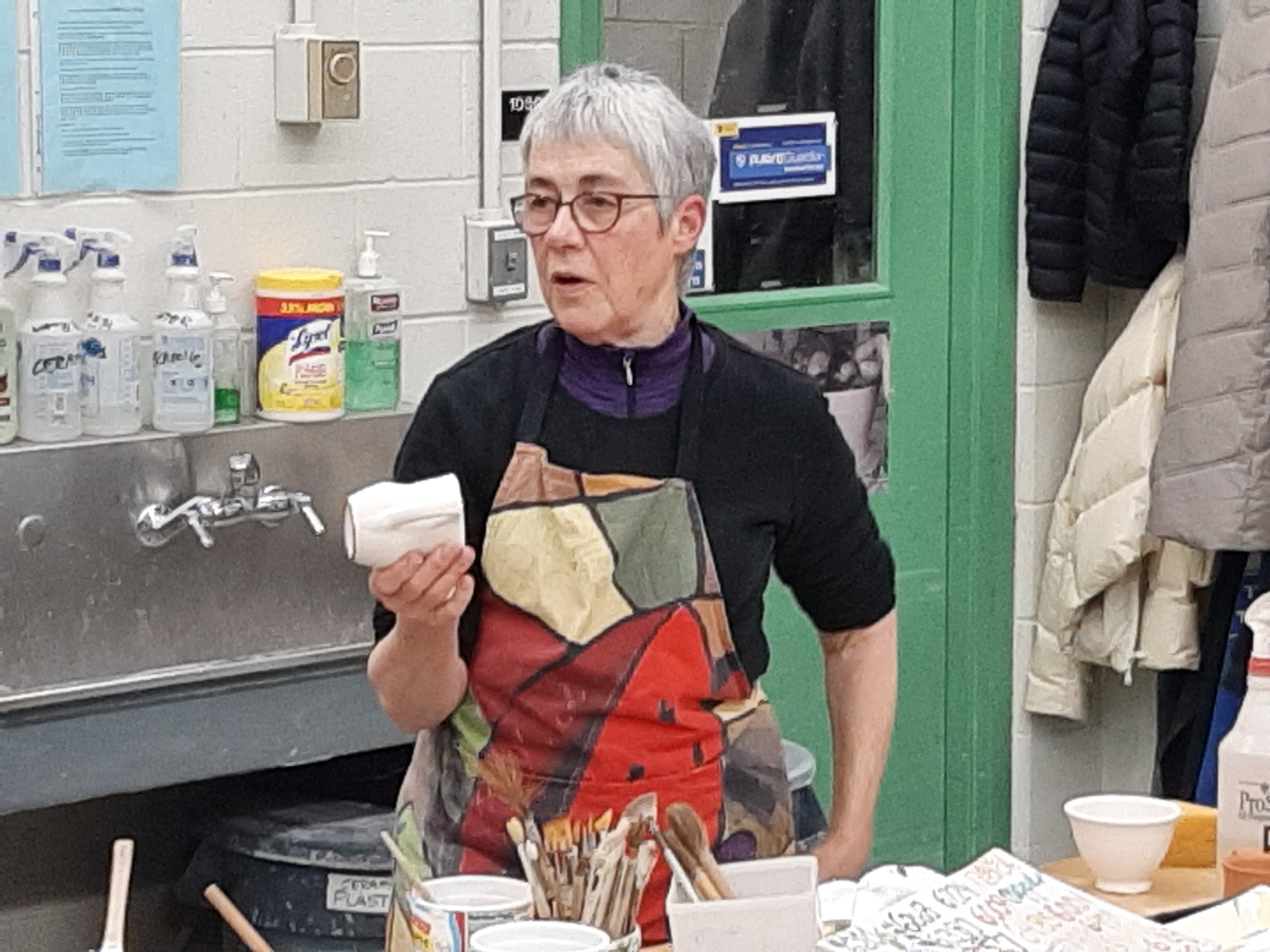
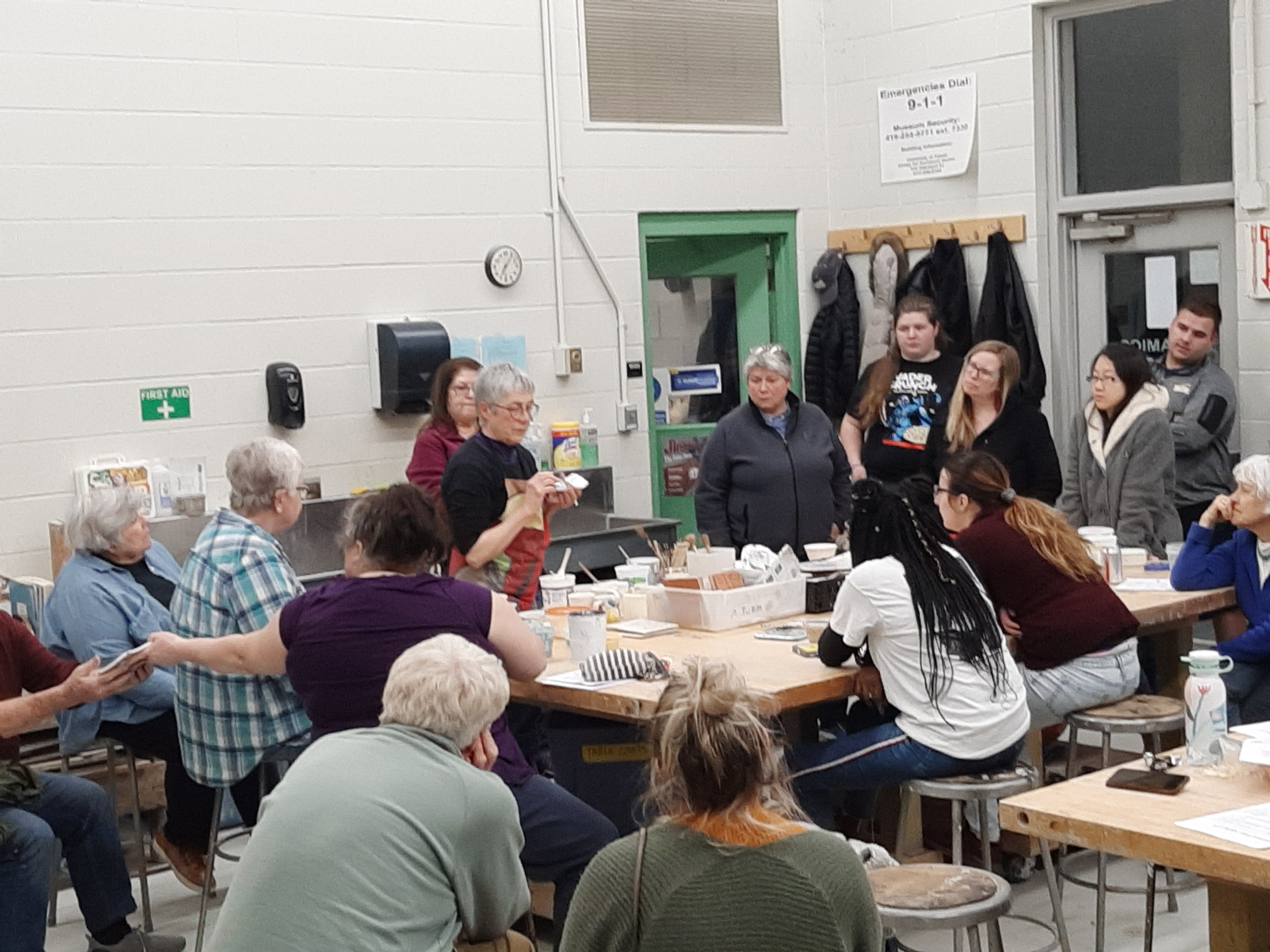
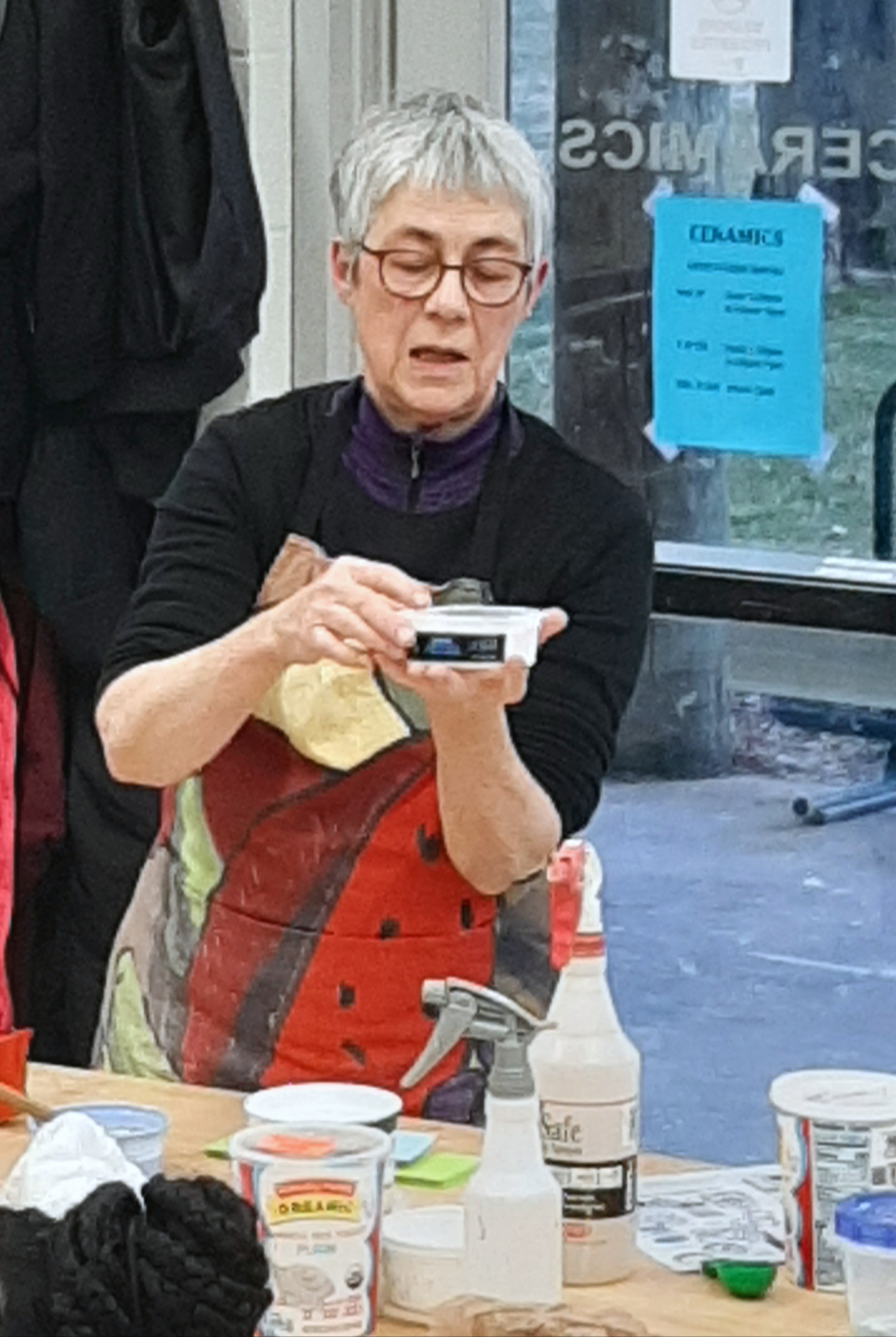
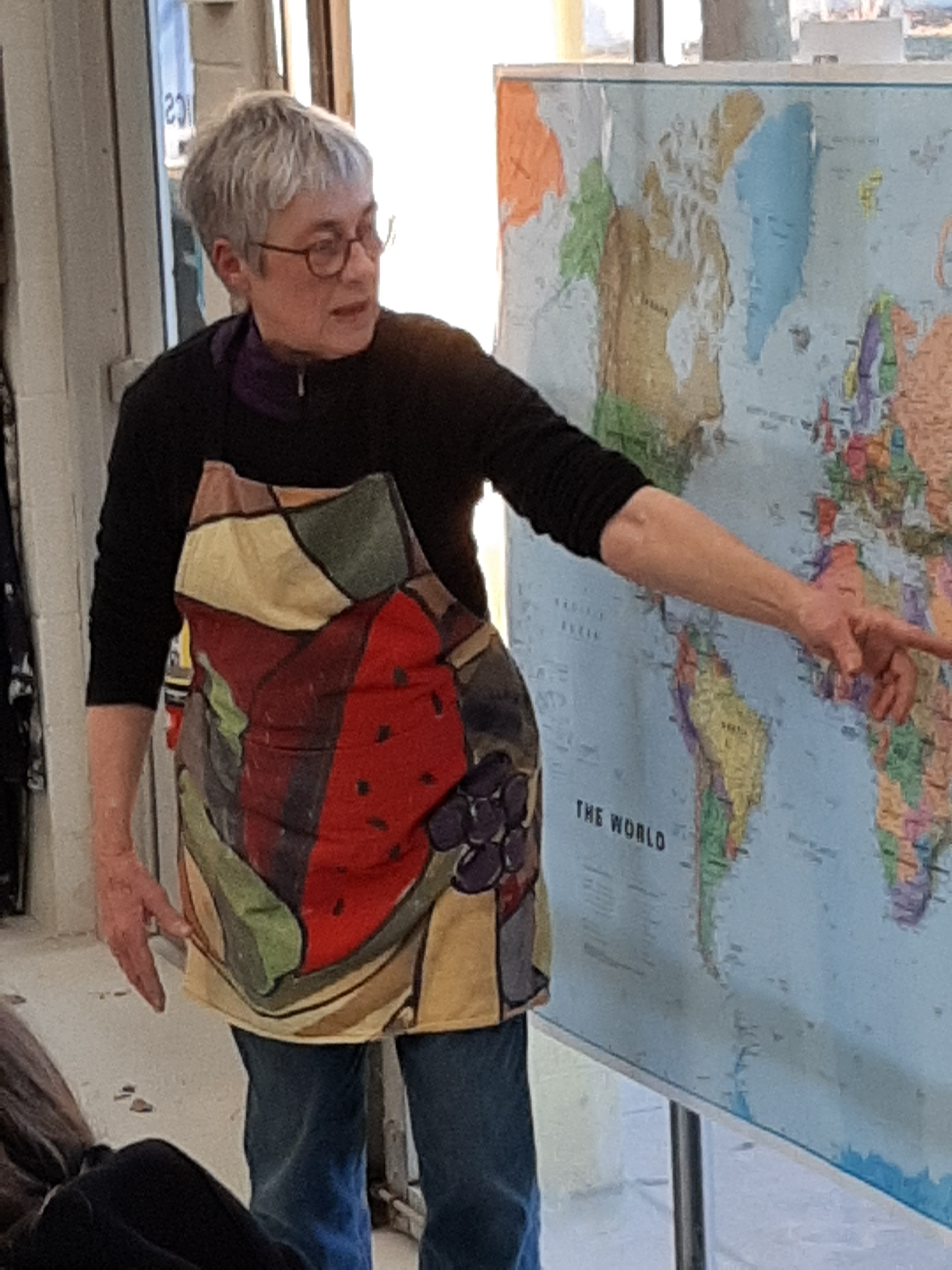
            Same lessons apply as before, take several photos of the event to make sure you can choose from a variety later. This saved me because I only got the name of the woman giving the lesson to the students so many of my pictures were no longer useful. Trying to tell a story with a few pictures was hard because the lesson went on for two hours.

            I also face the challenge of taking a variety of photos. Luckily the guest instructor moved all around the room allowing me to take several pictures. I learned to always be on the lookout for an opportunity because they can come and go quickly. That moment came when Ann Tubbs walked right next to me to use a pottery wheel. This allowed me to get my close-up picture. The other two varieties I needed were easy to obtain.

            I learned that the quality of my phone camera was much lower than my camera. The camera on my phone is good but not great, given the choice I would rather use my camera. I learned how important it is to move quickly, I only had 24 hours to post my pictures on Twitter and Instagram, this is preparing me for meeting tight deadlines.

            Overall I learned that I need to move quickly, make good decisions, and to make that my pictures are telling a story.  
Slideshow of My First Ten Pictures

My first lessons in photojournalism

After taking my first set of pictures, I now understand that photography requires patience. It requires knowledge of your surroundings as well as the camera that I am using. As someone who gets frustrated easily, I understand that when the picture is not coming out the way I want it to I must remain calm and keep adjusting. My knowledge in camera operations has highly increased while taking my first ten pictures.

I learned the importance of making sure the photo looks presentable in post-production. It is important to make sure everything is done right before, during, and after the picture is taken. The information that I learned will help me with photography over the rest of the semester and in the future.

Media Law and Ethics

AMENDMENT I

Congress shall make no law respecting an establishment of religion, or prohibiting the free exercise thereof; or abridging the freedom of speech, or of the press; or the right of the people peaceably to assemble, and to petition the Government for a redress of grievances.

#First Amendment,  Source: Constitute.org  

Photographers are forced to make difficult decisions when they are covering a story. The decide whether to take a photo. To make this decision a photographer must go through their ethical foundation. According to the book Photojournalism: The Professionals’ Approach by Kenneth Kobré the foundations of ethical decision-making are Utilitarian, Absolutist, and The Golden Rule. Utilitarian means they must consider if the picture they are taking is doing the greatest good for the greatest number of people. One example is taking a picture of a tragedy so people can learn from it so the tragedy does not happen again. Absolutist means some people have rule or principle they will never break. Some photojournalist might refuse to take a picture of a dead body. Finally, the Golden Rule of “do onto others as you would have them do unto you” is important because no photojournalist should ever do something that they wouldn’t want done to themselves. I take the last one seriously, and if I would not want to be shown in a certain situation, I won’t take a picture of someone else in that situation. I will always way the pros and cons of a picture before allowing it to be published, if the picture can make a big difference, then I will take the picture and publish it. #journalismethics

            According to Kobré’s book photographers can shoot in any public area at anytime with restrictions on airports. Public areas are the most limitless places for a photojournalist while the most restrictive places are in medical facilities. Another place that photojournalist might face difficulty are government buildings. According to tripsavvy Operators of potential terrorist targets, such as the Pentagon, may forbid photography. Other places that require permission are courtrooms prisons military bases and legislative chambers.

Manipulating a photo is deceiving the reader. If a reader knows the photo was fake, then they might not trust the rest of the story to be real either. Using a photo that is fake will cost the publisher trust over time. People don’t like to be lied to. One of the biggest restrictions of a photojournalist according to Kobré’s book it is illegal to go into somebody’s house and take pictures without permission. #privacymatters If it is not a public place, you need somebody’s permission to take photos. Privacy and defamation laws are the biggest limitations of a photojournalist. Another battle that photojournalists must fight is police lines. According to ACLU.org there has been an issue of people being harassed by police for taking still and video photographs in public places has emerged across the country. The ACLU writes that “Taking still and video photographs of things that are plainly visible in public spaces is a constitutional right — and that includes the outside of federal buildings, as well as transportation facilities, and police and other government officials carrying out their duties.” The only thing that is illegal for photojournalists to do is cross the yellow police line. Most laws favor the rights of photojournalists so it is important that they respect police and firefighters to make sure they can do their jobs, but they should never stop fighting for their rights. #pressfreedom

Design a site like this with WordPress.com
Get started